
Home › Downtown News › Training
TrainingHow to start playing rugby as an adult: a beginner's guide
Never played? Too old? Not fit enough? None of that stops you. Here is how adults actually get into rugby: which format to start with, what to expect at your first session, what to wear, how to stay safe, and how to get started in Las Vegas.

Key facts at a glance
- Age limit: no upper age limit; adults start in their 20s, 30s, 40s and beyond
- Best first step: a non-contact format (touch or tag) or a club's beginner session
- Safety rule that changed in 2026: World Rugby approved a lower legal tackle height for community rugby on June 17, 2026, effective for seasons starting after July 1, 2026; USA Rugby has used a below-the-sternum tackle height in sanctioned community competitions since September 1, 2024
- Free warm-up that cuts injury risk: World Rugby's Activate program; research co-led by England Rugby and the University of Bath found a 40% drop in soft-tissue injury risk and 60% drop in concussion risk in adult players who used it
- Gear you need: rugby boots or molded cleats, shorts, a jersey or T-shirt, socks and a mouthguard (World Rugby recommends every player wears one)
- Paperwork: USA Rugby says players should be registered before they practice or compete in sanctioned rugby; your club will walk you through it
Most people who play rugby in the US did not grow up with it. They saw a match on TV, a friend dragged them to a touch session, or they moved to a new city and wanted a team. If you are reading this wondering whether it is too late to start playing rugby as an adult, the answer is no. Rugby is one of the most welcoming adult team sports there is, and it has formats for every body type, fitness level and appetite for contact.
At Downtown Rugby, beginners are the point. Our social leagues, summer touch sessions and competitive squads exist so that someone who has never held an oval ball can turn up, learn, and find a crew. This guide walks you through everything we wish someone had told us before our first session.
Is it too late to start playing rugby as an adult?
No. Rugby is unusual among team sports because it has room for almost every shape and size. Big, strong players are valuable in the forwards; quick, small players are valuable at scrum-half and on the wing; good decision-makers can play almost anywhere. Adult club rugby in the US is built around grown-ups who started late, and social formats such as touch are played by adults of every age.
World Rugby's own beginner's guide says the game's ethos "embraces inclusion" and that newcomers are "sure to find a warm welcome" at a local club. Its advice for getting started is simple: your nearest club is "the best place to start," and your national union can point you to a list of clubs.
What changes as an adult is not whether you can play, but how you start. Kids learn contact gradually over years. Adults need the same gradual approach, compressed into weeks and months instead of seasons. That is why the smart route is to start with skills and non-contact play, build fitness, and add contact under a coach.
The players who last are not the fittest people on night one. They are the ones who keep turning up. Rugby rewards consistency: three months of showing up every week will take you further than any amount of "getting fit first" before you join.
Which type of rugby should a beginner start with?
Rugby is a family of games, not one game. For an adult beginner, picking the right entry point makes a huge difference to how much you enjoy it. England Rugby, for example, lists introductory non-contact options alongside full-contact 15-a-side rugby and summer or social sevens, so newcomers can choose their level.
| Format | Contact | Players a side | Good for |
|---|---|---|---|
| Touch | None: a touch replaces the tackle | 6 | Total beginners, mixed social play, learning to pass and run lines |
| Tag | None: pulling a tag replaces the tackle | Varies by league | Beginners, mixed groups, office and social leagues |
| Sevens | Full contact | 7 | Fit, fast players who like space and running |
| Tens (APR Games format) | Full contact | 10 | A step between sevens and fifteens; the format of the APR Games |
| Fifteens | Full contact | 15 | The full game, with a position for every body type |
If you have never played, start with touch. There is no tackling, games are short and fast, and men and women usually play together. We wrote a full guide to touch rugby rules, tips and how to start if you want the details. Once you can pass, catch and read the game, you can decide whether you want to move into contact rugby, or just keep enjoying touch. Both are completely fine.
If you already know you want contact, look for a club that runs beginner or "rookie" sessions, where new players learn contact skills separately from experienced players before they play a match.
What happens at your first rugby session?
Every club runs things slightly differently, but a typical first session for adult beginners looks something like this:
- Welcome and introductions. A coach or captain will ask about your experience and any injuries. Be honest: it helps them pair you with the right people.
- Warm-up. Many clubs now use a structured warm-up such as World Rugby's Activate program: running patterns, balance work, strength exercises and landing drills.
- Handling drills. Passing in pairs and small groups, catching on the move, and the basic rule that the ball can only be passed sideways or backward.
- Small games. Touch or tag games so you can start reading the game: where to stand, when to run, when to pass.
- Contact skills (later, not night one). When you are ready, coaches introduce tackling, falling safely and the breakdown using pads and bags, slowly and at walking pace first.
- Cool-down and the third half. A stretch, then usually food or a drink together. This is where new players really become part of the club.

What do you need to wear to play rugby?
You do not need to spend much to start. World Rugby's Law 4 says a player wears "a jersey, shorts and underwear, socks and boots," and it allows optional extras such as headgear, shoulder pads, shin guards and supports. A few practical points for beginners:
- Boots or cleats: rugby boots are ideal, but molded soccer or football cleats work fine for your first few weeks. Law 4 allows studs, including molded rubber studs. For touch on dry grass, turf shoes can be enough.
- Mouthguard: World Rugby "recommends all players wear a mouthguard or dental protector." Get one before you do any contact work.
- Clothing: shorts and a T-shirt you do not mind getting dirty. Avoid anything with zippers, buckles or hard edges; Law 4 bans those, and jewelry has to come off.
- Water: a big bottle. In Las Vegas, that is not optional.
Once you are hooked, team kit and training gear are easy to find. Check the APR merch store for American Pro Rugby gear.
Buy the mouthguard before the boots. Cheap boots work for a month; a broken tooth does not heal. Everything else can wait until you know you love the game, and you will.
How fit do you need to be to start rugby?
Less fit than you think. Your first sessions are mostly skills and short bursts of running, and coaches expect new players to need breaks. That said, rugby is a running sport with sprints, changes of direction and, in contact formats, a lot of getting up off the ground. A little preparation goes a long way:
- Build your running gradually. Short intervals (walk, jog, short sprint) are closer to rugby than long steady runs.
- Get stronger, simply. Squats, lunges, push-ups, rows and planks build the base that protects you in contact. Our sister club the Vegas Lions has a detailed guide to strength training for rugby if you want to go further.
- Warm up every time. World Rugby launched Activate in September 2019, and the research behind it found a 40% lower soft-tissue injury risk and a 60% lower concussion risk in adult players who used it. World Rugby advises using it "as regularly and frequently as is practical."
- Respect the heat. In Las Vegas, train in the evening or early morning, bring water, and take breaks. If you have a health condition, or have not exercised in a long time, check with your doctor before starting a new sport.
For a weekly strength block you can actually run, plus one rugby skill broken down each week, subscribe to The Breakdown, the free newsletter from American Pro Rugby.
Is rugby safe for adult beginners?
Rugby is a contact sport, and contact carries risk. But the game has changed a lot in the last few years to protect players, especially in the community game where most adults play:
- Lower tackle height. On June 17, 2026, the World Rugby Council approved a lower legal tackle height for community rugby, letting unions choose either the waist or the base of the sternum, for seasons beginning after July 1, 2026. Trials across 10 unions studied over 150,000 tackles and found the lower height reduced upright tackles, which World Rugby calls "the most likely to cause avoidable head impacts." USA Rugby has applied a below-the-sternum tackle height in all its sanctioned community competitions since September 1, 2024.
- Scrum safety. The same June 2026 Council meeting made the scrum "brake foot" full law, to reduce pressure on heads and necks in the scrum.
- Coached contact. Good clubs teach tackling, rucking and scrummaging in stages: body position first, then pads and bags, then live contact at low speed.
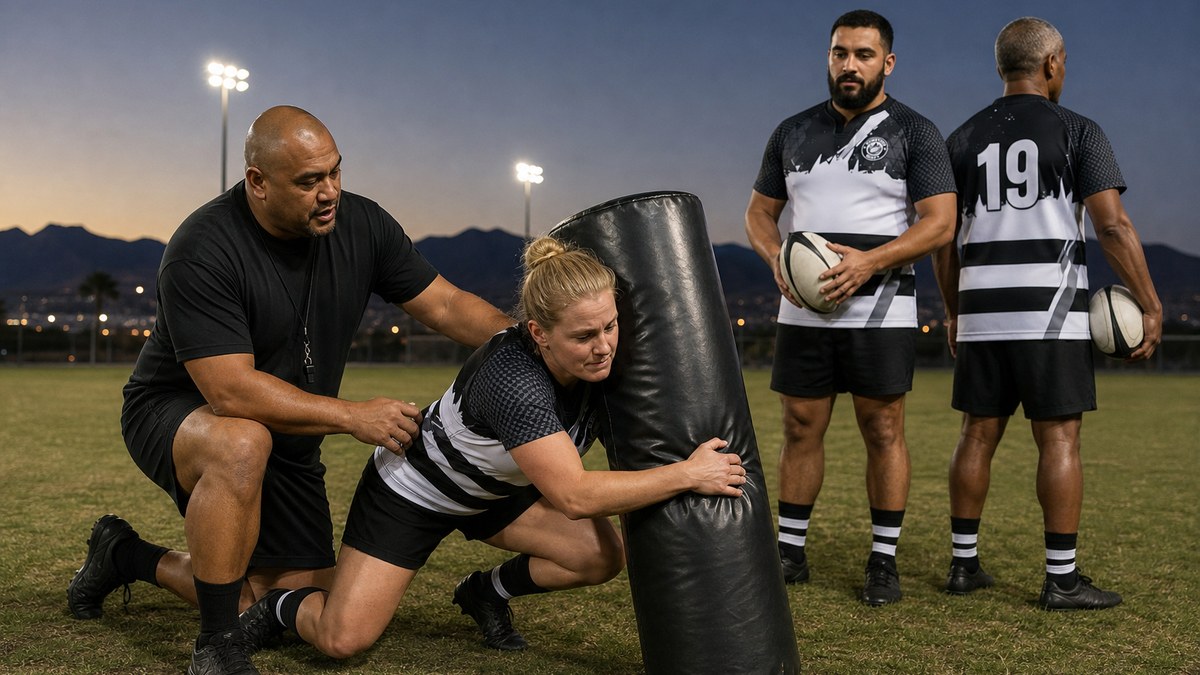
Safety note: learn all contact skills, including tackling, rucking and scrummaging, under a qualified coach. Never practice contact with friends in a park without supervision, and if a head injury is suspected, stop playing and get checked by a medical professional before returning. For technique detail, read the Vegas Knights' guide on how to tackle in rugby safely, and the Vegas Blackjacks' explainer on rugby rucking. APR's coaching clinic, May 28–31, 2027 in Las Vegas, is another good place to learn from qualified coaches.
Do you need to register to play rugby in the US?
For social touch sessions, usually not. For contact training and matches with a club, almost always yes. USA Rugby tells players to "be registered before you practice or compete," and warns that playing without the right registration and sanctioning can mean matches are forfeited and insurance coverage may not be valid. In practice, your club will send you a link to register, usually once you have tried a few sessions and decided to stay.
Ask your club three questions when you join:
- Do I need to register before contact training, or only before matches?
- Are your training sessions and matches sanctioned and insured?
- Who are the coaches, and what experience or qualifications do they have?
A good club answers those questions happily. If a club pushes you into full-contact games before you have learned to tackle and fall safely, find a different club. Patience with beginners is a sign of good coaching.
How do you learn the rules of rugby?
You do not need to know every law before you play. Learn as you go, starting with the basics:
- You can run with the ball and pass it, but only sideways or backward.
- You score a try by grounding the ball over the opponents' try line.
- When a player is tackled, they must release the ball, and players from both teams compete for it at the ruck.
- You must stay onside: generally, behind the ball or behind the last feet of a ruck or maul.
- Set pieces such as scrums and lineouts restart play after certain stoppages.
Watching rugby helps enormously. The Vegas Kings have a clear explainer on rugby union vs rugby league if you are confused about which code you are watching, and a guide to Rugby League Las Vegas 2027 if you want to see the pros in person. For the latest from around the world, follow APR's global rugby news.
Which rugby position is right for a beginner?
At first, it does not matter much. In touch and in early training, everyone passes, catches and runs. As you move into contact rugby, coaches will suggest positions based on your build and skills:
- Bigger, stronger players often start in the forwards: props, hooker, locks and back row. They win the ball at scrums, lineouts and rucks.
- Quicker, lighter players often start in the backs: scrum-half, fly-half, centers, wings and fullback. They use the space the forwards create.
- Not sure? Try a few. Many adult players change position in their first season.
Whatever you play, the same habits make you valuable: turn up, talk, work hard in defense, and get back on your feet quickly.
Set yourself a goal: the APR Games
Nothing focuses training like a date on the calendar. The APR Games 2027 run Memorial Day weekend, May 29–31, in Las Vegas: 10-a-side rugby with Men's Elite ($10,000 prize pool), Women's Social ($5,000) and Youth divisions. Player entry is $299 and includes a jersey, kit bag, at least three pool games and opening-night access.
Join the APR Games waitlistHow can you start playing rugby in Las Vegas?
Downtown Rugby runs social leagues, summer touch sessions and competitive squads for all levels, and beginners are always welcome. Here is how to start:
- Join The Breakdown. Social league dates, touch sessions and training times go out in The Breakdown, the free weekly email from American Pro Rugby. We never post session details we cannot stand behind, so that is the place to get them.
- Start with touch or a social session. Bring shorts, a T-shirt, grippy shoes, water and a mouthguard.
- Tell the coaches you are new. They will pair you with experienced players and keep contact work gradual.
- Stay for the third half. The social side is where teammates become friends. That is The Downtown Way: community, inclusive, excellence, fun first.
Downtown is one of five founding franchises of American Pro Rugby, alongside the Vegas Kings, the Vegas Knights, the Vegas Blackjacks and the Vegas Lions. Meet them all on the APR teams page. Rugby here is backed by local businesses too: APR partner In Too Win works in Las Vegas business and investment, and partner Clann13 makes supplements for athletes (as with anything you take, food comes first and your doctor has the final say).
Frequently asked questions
Can you start playing rugby at 30, 40 or older?
Yes. Many adults start rugby in their 30s and 40s, and touch rugby is played by adults of all ages. Start with non-contact formats, build fitness gradually and learn contact skills under a qualified coach.
Do I need experience to join a rugby club?
No. Most adult clubs welcome complete beginners. Tell the coaches you are new and they will start you on passing, catching and safe contact basics.
What is the easiest way to start playing rugby?
Touch or tag rugby. There is no tackling, men and women usually play together, and you learn the core skills of passing, catching and running lines.
What should I bring to my first rugby practice?
Shorts, a T-shirt, rugby boots or molded cleats, socks, a mouthguard and plenty of water. Remove all jewelry before you play.
Do I need a mouthguard for rugby?
World Rugby recommends that all players wear a mouthguard or dental protector. Get one before you do any contact training.
How fit do I need to be to start rugby?
You do not need to be very fit to start. Sessions for beginners mix skills with short bursts of running. Fitness improves quickly if you train regularly, and a structured warm-up such as World Rugby's Activate program helps reduce injury risk.
Is rugby dangerous for beginners?
Rugby is a contact sport and carries risk, but community rugby now uses a lower legal tackle height and coaches teach contact in stages. Learn tackling, rucking and scrummaging under a qualified coach and never rush into full-contact games.
Do I need to register with USA Rugby?
For contact training and matches with a club, usually yes. USA Rugby says players should be registered before they practice or compete in sanctioned rugby. Your club will send you the registration link.
Can women start playing rugby as adults?
Absolutely. Mixed touch is a great starting point, many clubs run women's sessions, and the APR Games include a Women's Social division.
How do I start playing rugby in Las Vegas?
Join The Breakdown, American Pro Rugby's free weekly newsletter, which carries Downtown Rugby's social league dates, touch sessions and training times. Beginners are always welcome.
Keep reading
Sources
- World Rugby: World Rugby lowers legal tackle height in community rugby (June 17, 2026)
- World Rugby: Executive Board recommends lower tackle height be written into community law (December 4, 2025)
- USA Rugby: implementing the Global Law Variation on tackle height from September 1, 2024 (April 2024)
- USA Rugby: Is my practice, scrimmage, match or tournament covered by USA Rugby insurance? (August 28, 2018)
- World Rugby: Activate preventive exercise program launch (September 9, 2019)
- World Rugby Passport: Law 4, Permitted clothing (accessed October 28, 2026)
- World Rugby: Beginner's guide, finding a club (accessed October 28, 2026)
- England Rugby: Ways to play (accessed October 28, 2026)
- American Pro Rugby: APR Games 2027
This guide is general information for adults starting rugby, not individual coaching or medical advice. Rules and registration requirements vary between competitions and clubs: always check with yours. Learn all contact skills under a qualified coach, and check with your doctor before starting a new sport if you have a health condition.